Get in touch - info@waavpafrica.org
Socio-economic burden of parasitic infections, ethnobotanical and indigenous knowledge of helminth control in ruminants
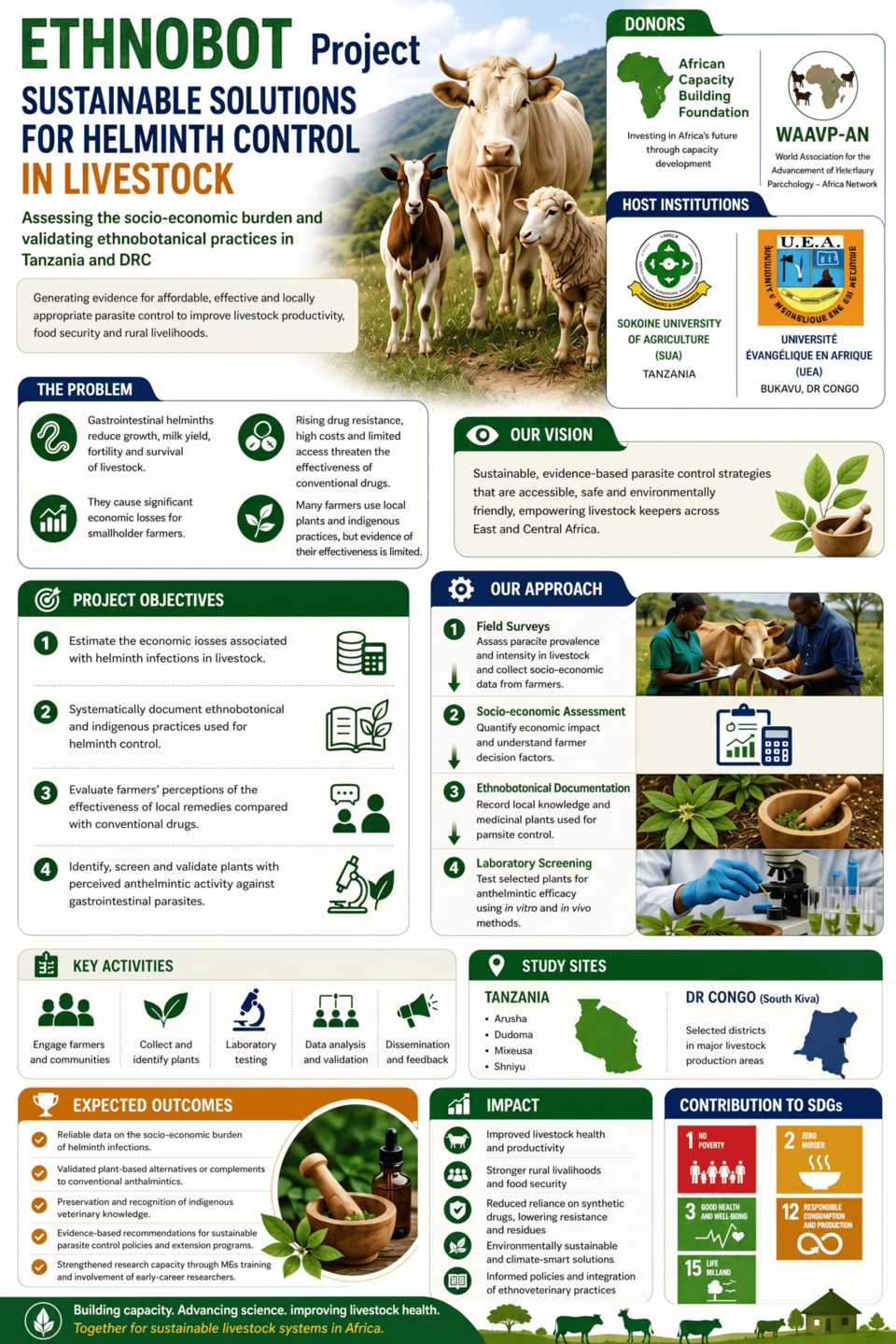
Helminth infections remain one of the leading constraints to livestock productivity in East and Central Africa, particularly in Tanzania and the Democratic Republic of Congo (DRC). Gastrointestinal parasites reduce animal growth, milk production, fertility, and survival, resulting in substantial economic losses for smallholder farmers. Although synthetic anthelmintic drugs are widely used for parasite control, their effectiveness is increasingly threatened by drug resistance, high costs, limited accessibility, and concerns over drug residues in animal-derived food products. Consequently, many livestock keepers rely on ethnobotanical and indigenous practices; however, these approaches remain inadequately documented and lack sufficient scientific validation.
The ETHNOBOT Project aims to assess the socio-economic burden of helminth infections while documenting and validating ethnobotanical and indigenous parasite control practices among smallholder livestock farmers in Tanzania and the DRC. Specifically, the project will quantify the economic impact of helminth infections on livestock productivity and household income, determine the prevalence and intensity of helminth infections in cattle and goats, systematically document indigenous knowledge and medicinal plants used for parasite control, evaluate farmers’ perceptions of the effectiveness of traditional remedies compared with conventional anthelmintics, and identify promising medicinal plants for laboratory validation. The efficacy studies will involve the preparation of plant extracts followed by in vitro anthelmintic assays, including egg hatch inhibition, larval motility inhibition, and adult worm mortality tests, with comparisons against standard anthelmintic drugs to identify candidate plant-based alternatives.
The project integrates epidemiological surveys, socio-economic assessments, ethnobotanical documentation, and laboratory efficacy testing to generate evidence supporting sustainable, affordable, and locally appropriate parasite control strategies. Expected outcomes include improved understanding of the socio-economic burden of helminth infections, scientifically validated plant-based alternatives to conventional anthelmintics, preservation of indigenous veterinary knowledge, strengthened research capacity in veterinary parasitology, and evidence-based recommendations for integrating ethnoveterinary practices into livestock health management policies. Ultimately, the project seeks to improve livestock productivity, enhance food security and rural livelihoods, and promote environmentally sustainable parasite control across East and Central Africa.