Get in touch - info@waavpafrica.org
Project Team: M.C. Marufu, R.D. Miambo, S. Chitanga, S.I. Tshilwane, S. Mukaratirwa, S.M.S. Afonso
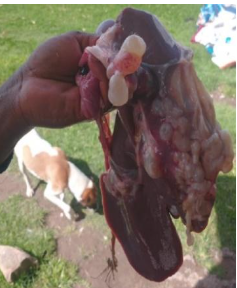
This multi-national research initiative addresses critical knowledge gaps regarding the epidemiology, genetic diversity, and economic impact of Echinococcus granulosus sensu lato (s.l.) across South Africa, Namibia, and Mozambique. The investigation employs a comprehensive, cross-sectional approach at strategic livestock-wildlife interface and livestock-exclusive sites to elucidate transmission dynamics in a region where epidemiological data remains fragmentary. Diagnostic methodologies encompass coprology, ELISA, and PCR for definitive hosts, complemented by ELISA and PCR for intermediate hosts. Molecular characterisation using Sanger sequencing will identify circulating genotypes and establish phylogenetic relationships between strains to ascertain host specificity patterns and zoonotic potential. Concurrently, the project will quantify the economic burden through retrospective analysis of hydatid cyst-associated organ condemnation data from regional abattoirs and trace post-abattoir disposal practices that may perpetuate transmission cycles.
Knowledge, attitudes, and practices assessment among livestock farmers will illuminate socio-cultural factors influencing parasite transmission. This integrated epidemiological investigation will generate high-resolution data to support evidence-based interventions across the livestock-wildlife-human interface. Expected outcomes include comprehensive strain-specific prevalence data, genotypic profiling, economic impact assessment, and identification of regionally-relevant risk factors, ultimately informing targeted prevention and control strategies within a One Health framework. The project will build regional capacity through postgraduate training and stakeholder engagement while addressing the World Association for the Advancement of Veterinary Parasitology-African Network’s strategic priorities in neglected parasitic zoonosis control.