Get in touch - info@waavpafrica.org
One Health Approach for Cystic Echinococcosis
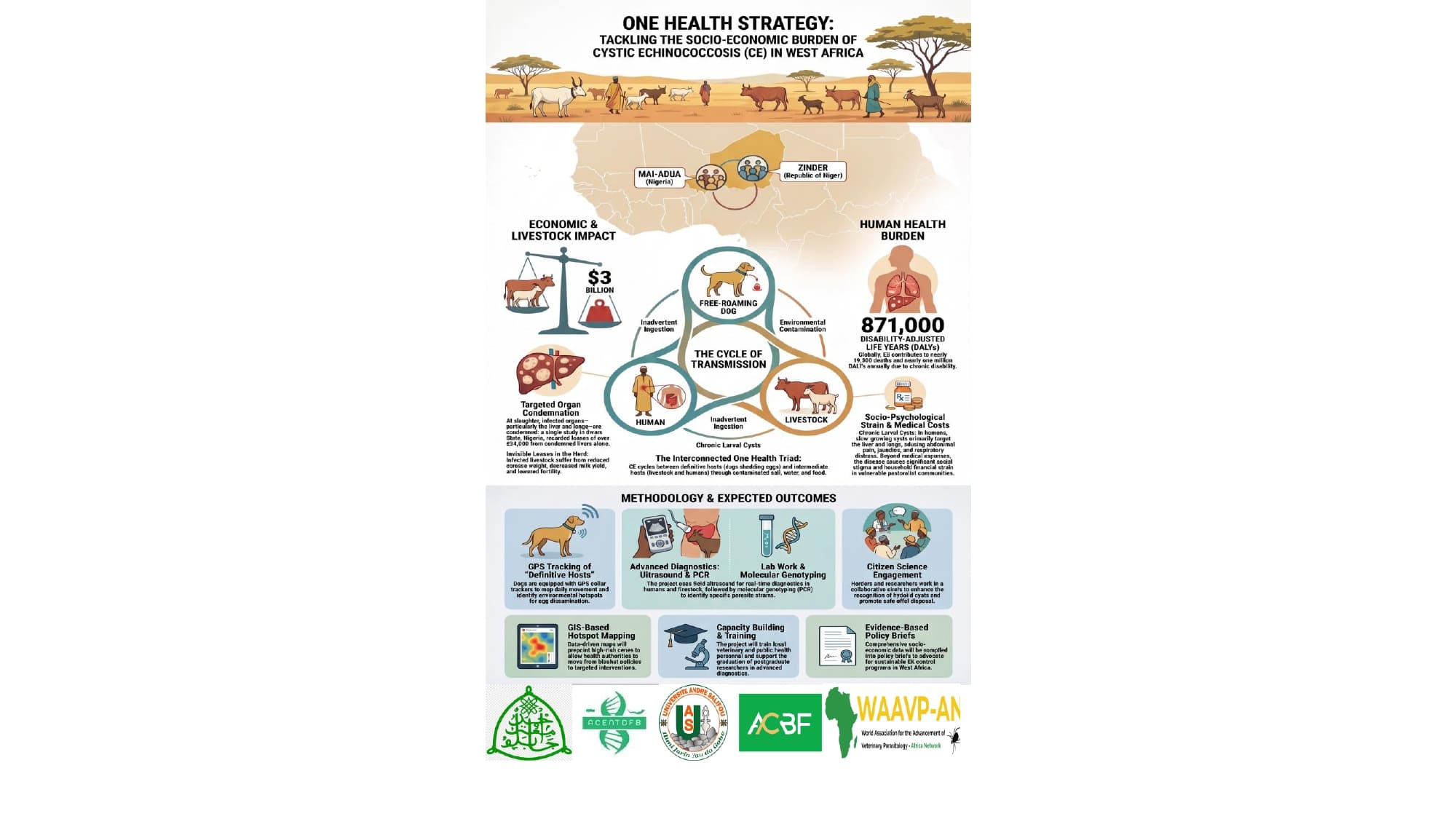
Cystic echinococcosis (CE) is a neglected tropical disease ranked as the second most important zoonotic disease in West Africa, posing severe public health and economic challenges. Globally, CE causes an estimated 19,300 deaths and $3 billion in annual economic losses due to livestock production drops and human treatment costs. Peri-urban pastoralist communities in Mai-Adua (Nigeria) and Zinder (Republic of Niger) serve as epidemiological hotspots due to nomadic grazing practices, close human-animal-dog interactions, informal slaughtering, and poor waste disposal.
Despite this high dual burden on human health and livestock, CE remains severely under-researched and under-reported in this border region, leaving a critical data gap that hinders evidence-based national health policies. Running from May 2026 to May 2028, this project employs an integrated One Health approach to evaluate CE across human, animal, and environmental sectors to establish sustainable regional control strategies. Specifically, the study aims to determine CE prevalence, circulating genotypes, and spatial distribution in livestock; identify human CE occurrence using ultrasound and ELISA screening; quantify the direct and indirect economic losses in livestock productivity alongside the socio-psychological impacts on households; and utilize GPS tracking on dogs to isolate environmental contamination hotspots.
The expected outcomes include the generation of comprehensive transboundary baseline epidemiological and socio-economic datasets, GIS-based risk maps, and community-led surveillance systems under a citizen science framework. Ultimately, these outputs will provide regional policymakers with compelling evidence to implement targeted, cost-effective cross-border interventions while simultaneously building local veterinary and public health capacities