Get in touch - info@waavpafrica.org
Project Team: D. Souleymane, B. Kebede
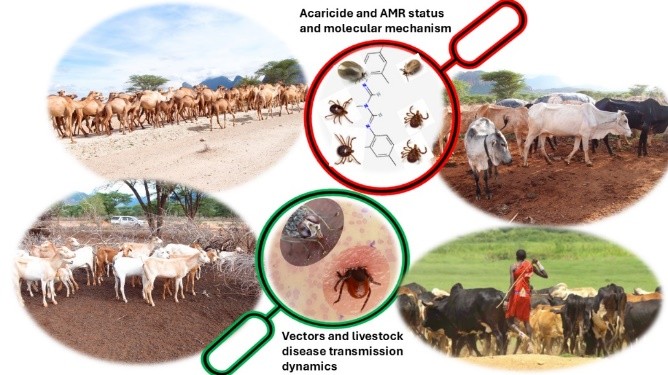
The livestock sector is a crucial catalyst for economic growth and development in Eastern Africa, sustaining livelihoods via pastoralism and agro pastoralism. In Kenya’s dry and semi-arid regions, as well as in Ethiopia, livestock serves as the primary source of income and currency for pastoral people, significantly augmenting household revenues. The climate-resilient strategy for pasture access via transhumance creates optimal conditions for the proliferation of vector-borne diseases, particularly trypanosomiasis, and tick-borne diseases, especially in areas with substantial wildlife reservoirs. The transboundary movement of livestock exacerbates the risks of disease outbreaks and fosters the emergence of resistance to antimicrobials and acaricides, complicating disease management. This project tackles these significant concerns by investigating the influence of transhumance in disease transmission dynamics and enhancing diagnostic and management strategies.
The project combines entomological and parasitological surveys with innovative diagnostic techniques, including LAMP-CRISPR, to enhance the sensitivity, specificity, and cost-effectiveness of field-deployable equipment for detecting vector-borne infections. Furthermore, it evaluates pastoralists methodologies in vector and disease management, correlating this with the incidence of acaricide and anti-microbial resistance. The project end goal is to develop actionable insights, innovative tools, and capacity-building initiatives to strengthen veterinary parasitology, improved disease management tools that will support sustainable pastoralist livelihoods in the region.