Get in touch - info@waavpafrica.org
Implementation of a Community-Based Quasi-Experimental Intervention to Control Zoonotic Helminths of Dog origin in East Africa
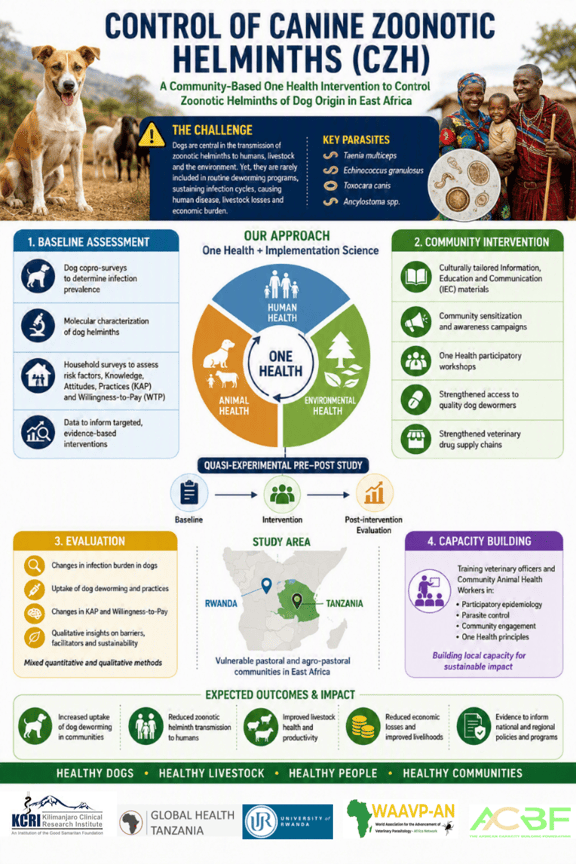
Canine zoonotic helminths (CZHs), including Taenia multiceps, Echinococcus granulosus, Toxocara canis, and Ancylostoma spp., are important but neglected causes of human disease and livestock losses in East Africa. Dogs play a central role in transmission but are rarely included in routine deworming programs, perpetuating infection cycles and limiting effective control. The project is being implemented in Monduli and Babati Districts (Tanzania) and Kayonza and Nyagatare Districts (Rwanda).
This project uses a One Health and implementation science approach to design and evaluate sustainable community-based dog deworming interventions through a quasi-experimental pre–post study. Baseline assessments include dog copro-surveys, molecular characterization of helminths, and household surveys to determine infection prevalence, risk factors, knowledge, attitudes and practices (KAP), and willingness-to-pay (WTP). Interventions include culturally tailored information, education and communication (IEC) materials, community sensitization, One Health workshops, and strengthened veterinary drug supply systems.
The project evaluates changes in infection burden, KAP, WTP, and deworming practices, while building the capacity of veterinary officers and community animal health workers. Expected outcomes include increased uptake of dog deworming, reduced zoonotic transmission, improved livestock productivity, and evidence to inform national and regional policies, contributing to sustainable parasite control across East Africa.