Get in touch - info@waavpafrica.org
A new intervention strategy for the control of coccidiosis and haemonchosis co-morbidity in goats using dietary biotics
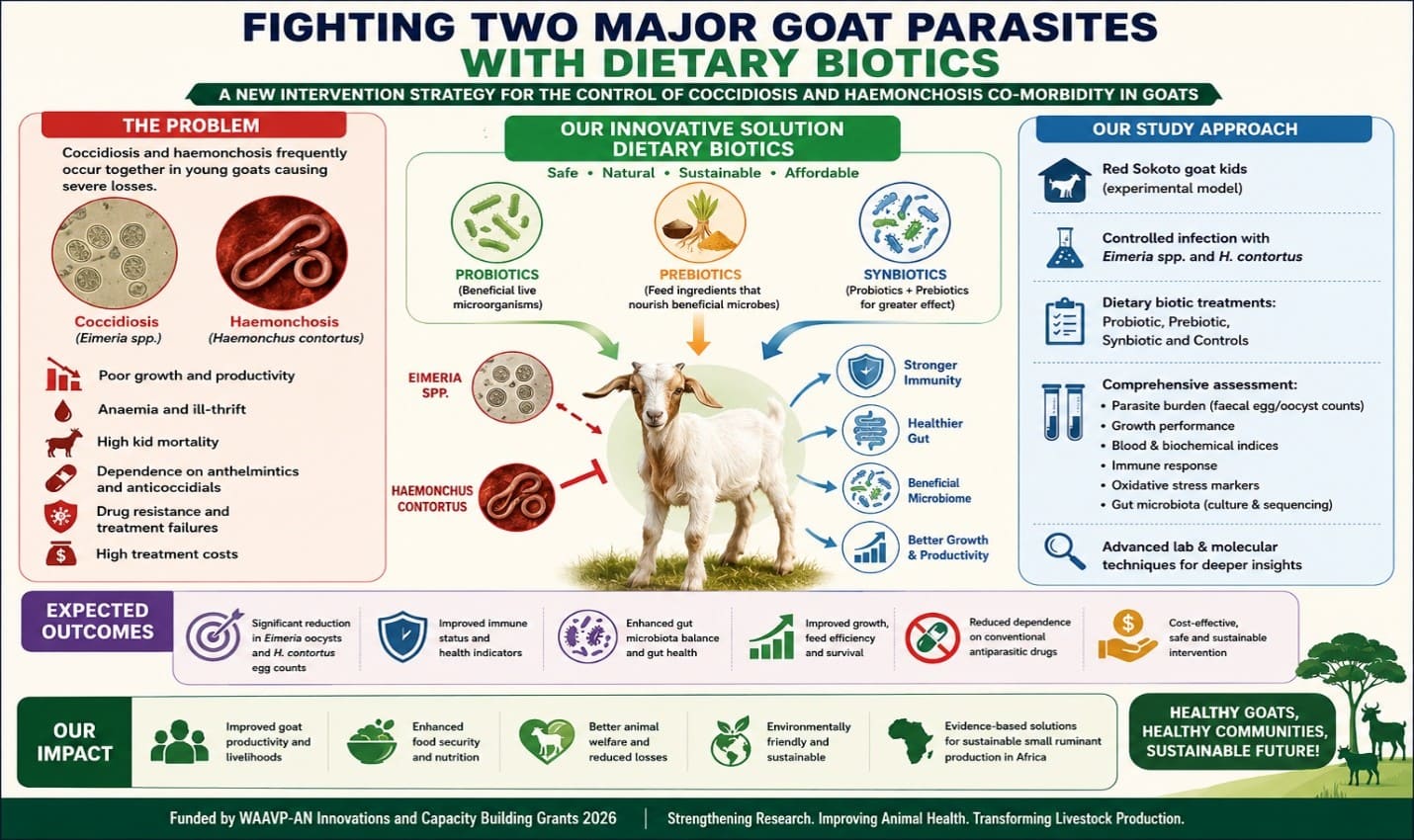
Gastrointestinal parasitic diseases remain one of the major constraints to goat production in sub-Saharan Africa. Among these, coccidiosis caused by Eimeria species and haemonchosis caused by Haemonchus contortus frequently occur together in young goats, leading to poor growth, anemia, reduced productivity, increased treatment costs, and high mortality. Control of these infections relies heavily on antiparasitic drugs, yet growing concerns about drug resistance, treatment failure, and the high cost of medications highlight the need for sustainable alternatives.
This WAAVP-AN funded project seeks to develop a novel nutritional approach for controlling coccidiosis and haemonchosis co-morbidity in young goats through the use of dietary biotics, including probiotics, prebiotics, and synbiotics. Using Red Sokoto goat kids as the experimental model, the study will evaluate the effects of these dietary interventions on parasite burden, growth performance, hematological and biochemical indices, immune responses, oxidative stress markers, and gut microbial composition.
Expected outcomes include the development of an effective, affordable, and environmentally sustainable complementary strategy for parasite control in goats, reduced dependence on conventional antiparasitic drugs, improved productivity and welfare of small ruminants, and strengthened research capacity in veterinary parasitology and animal health in Africa. The findings are expected to contribute to improved livestock livelihoods, food security, and sustainable goat production systems across the region.