Get in touch - info@waavpafrica.org
Project team: R.E. Yessinou, K.P. Yao, N. Anagonou, G.B. Epse Aké, E. Zossou
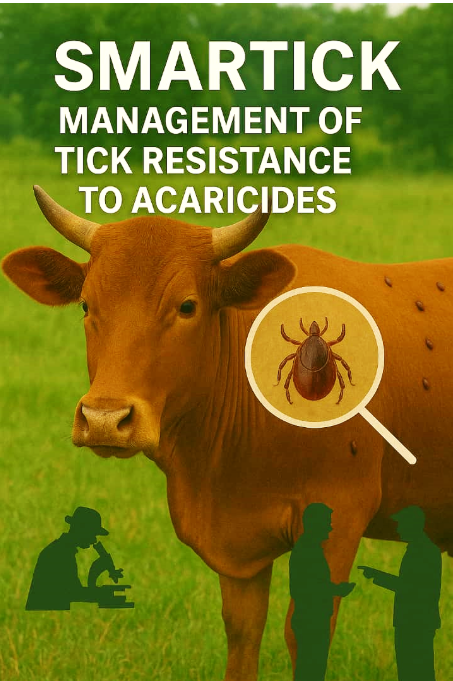
The development of acaricide resistance in ticks is a major problem in the cattle production of tropical and subtropical regions, causing significant economic losses. Although synthetic acaricides play a major role in tick management, their injudicious use has caused environmental pollution and has promoted the proliferation of resistant ticks. Many families of acaricides used intensively and abusively to control tick infestations, are facing increasing failure, due to the selection of resistance in different tick populations, particularly from Rhipicephalus microplus. Thus, the implementation of an acaricide resistance management strategy is necessary to limit intensive use and effectively combat the resurgence of ticks and transmitted diseases.
However, the aim of this project is to improve the productivity of cattle farms through efficient management of tick resistance to acaricides. By combining survey studies on the perceptions, knowledge, and tick control methods of combating acaricide-resistant ticks with bioassay, molecular analyses and participatory approach of livestock stakeholders we will better understand the relevance of the problem in Benin and Côte d’Ivoire. This study will culminate in a rich dataset that allows us to appreciate the level of understanding of stakeholders, the molecular mechanisms of tick resistance, thus enabling us to better plan the fight against ticks and limit the emergence of resistance to acaricides.