Get in touch - info@waavpafrica.org
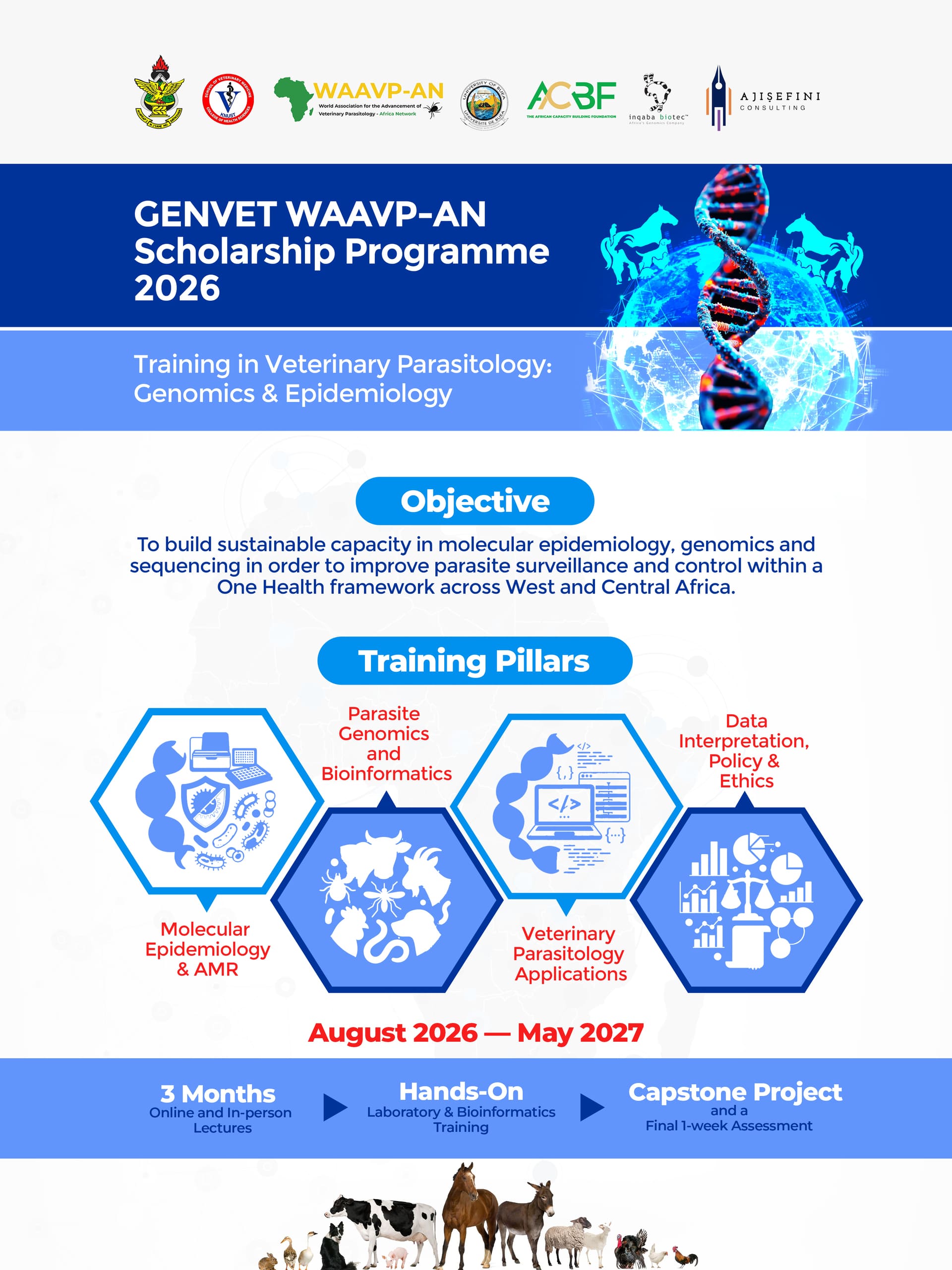
Genvet Project—Strengthening Africa’s Livestock Health with Genomics and Molecular Diagnostics
Parasitic diseases remain a major constraint on Africa’s livestock sector, causing morbidity, mortality, reduced productivity, and significant economic losses. The growing challenge of acaricide and drug resistance, coupled with reliance on conventional diagnostic methods such as microscopy, has led to delayed interventions, drug misuse, and accelerated resistance spread. These issues are compounded by a shortage of veterinary parasitologists trained in molecular epidemiology and genomics, leaving a critical gap in Africa’s One Health response.
Globally, molecular epidemiology and genomics have transformed parasite surveillance, enabling precise species identification, detection of resistance mutations, and transmission mapping. However, Africa’s limited local sequencing capacity undermines data sovereignty and ownership, as most sequencing is outsourced. This training program seeks to address these gaps by equipping veterinary parasitologists with skills in molecular diagnostics (PCR, qPCR, sequencing), genomics, bioinformatics, and applied epidemiology. The course emphasizes African contexts, integrating climate change, emerging parasite threats, and antimicrobial resistance frameworks, while aligning with continental priorities such as the Africa CDC Pathogen Genomics Initiative, AU-IBAR’s Animal Health Strategy, and the One Health Joint Plan of Action.
The program aims to train 40 veterinary parasitologists over 18 months through a certified modular curriculum that combines theory, practicals, and bioinformatics. Expected outcomes include a replicable short-course curriculum registered at the KNUST, actionable capstone projects, strengthened networks linking universities, laboratories, and policymakers, and policy briefs to inform national parasite and resistance control strategies. Ultimately, the initiative will build sustainable African capacity in parasite genomics and epidemiology, improve diagnostic accuracy, promote rational drug use, and enhance evidence-based policy for veterinary and public health.